Source compact metal spice crusher for daily use, flour, and milling
Compare 30 listings for the compact metal spice crusher suitable for daily use, flour processing, and milling applications. Buyers can review specifications like size, material, and customization options to find the right supplier for their needs.
Key considerations
Products List




Comprehensive Sourcing Guide
Strategic Sourcing Guide for Compact Metal Spice Crushers
The global demand for efficient, space-saving grinding solutions has elevated the profile of compact metal spice crushers in the B2B procurement landscape. Buyers seeking these units must navigate a complex market where product attributes vary significantly between industrial-grade machinery and smaller, specialized tools. This guide synthesizes observed market data and technical realities to provide a disciplined framework for sourcing. The focus remains on verifying product specifications, understanding cost structures, and ensuring that the selected equipment aligns with specific operational requirements without relying on unverified marketing claims.
Technical Specifications and Material Verification
When evaluating compact metal spice crushers, the primary differentiator lies in the material composition and dimensional specifications. Market observations indicate a divergence in product offerings, with some units explicitly listed as constructed from Metal, while others in the same category are identified as Plastic. For applications requiring durability and resistance to high friction or heat, a Metal construction is generally the preferred baseline. Buyers must verify the specific alloy or grade of the metal, as the term "Metal" alone does not guarantee performance standards for heavy-duty grinding.
Dimensional constraints are equally critical for compact units. Observed specifications reveal a wide range of sizes, including models with dimensions such as 40*35mm and others with larger footprints like 10808201220mm. The distinction between a handheld or benchtop unit and a floor-standing industrial grinder is often defined by these measurements. For instance, a unit with a Diameter of 58mm and a Height of 80mm represents a significantly different form factor compared to a machine with a Diameter of 63mm and a height of 36 or 24 mm. Procurement teams must cross-reference these dimensions against their available floor space and the physical dimensions of the target production line.
Furthermore, the internal mechanics, such as the Sieve Plate configuration, play a vital role in the final product quality. Available data lists sieve plate options ranging from 678/9/10/12/14/16/20/25/30mm. This variety suggests that the granularity of the ground spice is adjustable, a feature essential for diverse culinary or pharmaceutical applications. Buyers should confirm that the specific model selected supports the required sieve plate sizes for their intended output consistency. The Working Style is another technical parameter to note, with some units operating via Shaking or Handshaking mechanisms, while others may utilize Disc (Wheel) Type grinding discs. Understanding the motion dynamics is crucial for assessing vibration levels and potential wear on the machine frame.
Compliance, Certification, and Safety Standards
In the B2B sector, compliance is not merely a formality but a prerequisite for market access and operational safety. While specific certification names are not universally applicable to every listing, buyers must verify that the equipment meets relevant safety standards for electrical and mechanical components. For units operating on 220V power sources, electrical safety certifications are mandatory to prevent hazards in commercial kitchens or industrial facilities. The Condition of the equipment, often listed as New, implies adherence to current manufacturing safety protocols, but this should be validated through third-party inspection reports rather than seller assertions.
Standardization is another area requiring rigorous attention. The market data references specific product standards, such as 40*35mm and 10808201220, which likely correspond to dimensional tolerances or packaging standards rather than international safety codes like ISO or CE. Buyers must explicitly request documentation confirming compliance with local electrical codes and mechanical safety regulations in their destination country. The Power Source is listed as Handshaking for some units, which may imply manual operation, but for electric models, the Power (Kw) rating, such as 15 Kw, indicates significant energy consumption that requires appropriate electrical infrastructure.
Additionally, the OEM (Original Equipment Manufacturer) capabilities of the supplier are relevant to compliance. If a buyer requires custom branding or specific safety markings, the supplier's ability to provide Customized solutions must be verified. The OEM Print requirements, such as 240 PCS for 6 Patterns or 480 PCS for 6 Colors, suggest that branding is a modular process. Buyers should ensure that any custom markings do not obscure safety warnings or operational instructions, which is a common compliance pitfall in private-label manufacturing.
Cost Drivers and Pricing Dynamics
The pricing structure for compact metal spice crushers is influenced by a complex interplay of material costs, manufacturing complexity, and order volume. The observed price range spans from 0.35 USD to 86,000 USD, a disparity that reflects the vast difference between small components and large industrial systems. A unit priced at the lower end likely represents a simple, manual, or plastic-based tool, whereas the upper end of the spectrum corresponds to heavy-duty, fully automated metal grinding systems with high power ratings.
Material costs are a primary driver. As noted, the distinction between Metal and Plastic materials significantly impacts the base cost. Metal components, particularly those designed for high-wear applications like grinding, require more expensive raw materials and more intensive machining processes. The Net Weight of the unit is another indicator of cost; a machine weighing 350 Kg or 12 Kg inherently costs more in terms of material and shipping than a unit weighing 140g or 65-165g.
Order volume, defined by the Minimum Order Quantity (MOQ), also dictates the unit price. The observed MOQ range is 1 to 240, with some specific listings indicating an MOQ of 450 PCS. Buyers purchasing small quantities may face higher per-unit costs, while those meeting the 450 PCS threshold or higher may access more competitive pricing tiers. The Carton Qty and Display Pack configurations, such as 12 PCS/ Box or 120 PCS/ CTN, further influence logistics costs. Bulk packaging reduces per-unit shipping expenses but requires larger upfront capital and storage capacity.
Typical Applications and Operational Fit
The versatility of compact metal spice crushers allows them to serve a broad spectrum of industries, from small-scale artisanal production to large-scale industrial processing. The Application field in the product data lists Daily Use and Flour, indicating suitability for both consumer-grade and commercial food processing environments. For Flour milling, the Sieve Plate options are critical, as different grain types require specific mesh sizes to achieve the desired texture.
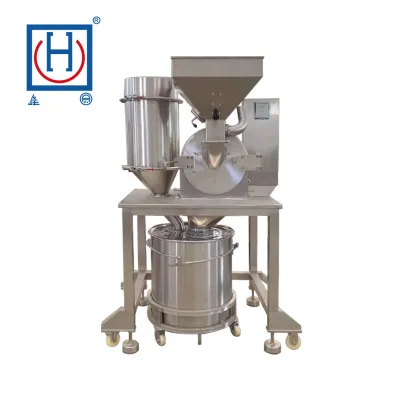
The Appearance of the unit, described as Vertical, suggests a design optimized for vertical space, which is advantageous in facilities with limited floor area. This vertical configuration is common in compact crushers where the grinding chamber is stacked above the collection bin. The Object of the machine, identified as a Milling Cutter, confirms its primary function is material reduction. Whether the application involves grinding spices, grains, or other dry materials, the Working Style (e.g., Shaking) must be compatible with the material flow to prevent clogging or uneven grinding.
For businesses requiring custom branding, the Customization availability is a key operational advantage. Suppliers offering OEM services can tailor the machine's exterior or control interfaces to match corporate identity. However, buyers must ensure that the customization does not compromise the machine's functional integrity. The Power Source being Handshaking for some models suggests a niche application where portability and lack of electrical dependency are prioritized, such as in remote locations or for demonstration purposes.
Supplier Evaluation and Verification Protocols
Selecting the right supplier requires a due diligence process that goes beyond the initial product listing. The prod_origin is listed as China for the observed products, which is a common manufacturing hub for this category. However, buyers must verify the specific factory location and its capacity to handle their order volume. The prod_packing methods, ranging from Carton to Wooden Case and Paper Box, indicate varying levels of protection during transit. For heavy industrial units, a Wooden Case is often necessary to prevent damage, whereas lighter units may suffice with Carton or Paper Box packaging.
Supplier reliability is often correlated with their ability to meet Customized requests. The data shows specific OEM Print requirements, such as 240 PCS for 6 Patterns or 480 PCS for 6 Colors. A supplier's ability to manage these complex production runs without errors is a strong indicator of their operational maturity. Buyers should request samples of previous OEM work to verify the quality of printing and customization.
Furthermore, the Condition of the product, listed as New, should be verified through photos or video inspections. Buyers must ensure that the "New" condition refers to brand-new, unused inventory rather than refurbished or returned goods. The Standard listed as 40*35mm or 10808201220 should be treated as a reference for dimensional consistency, but buyers must confirm that the supplier can maintain these tolerances across the entire production batch.
Quality Control and Long-Term Procurement Considerations
Quality control (QC) is essential to ensure that the purchased crushers meet performance expectations over their lifespan. The Net Weight variations, such as 140g versus 350 Kg, highlight the need for precise weighing checks during the QC process to ensure that no components are missing or substituted with inferior materials. For units with Sieve Plate options, QC should include testing the actual mesh size to ensure it matches the specified 678/9/10/12/14/16/20/25/30mm range.
Long-term procurement considerations involve assessing the availability of spare parts and the durability of the Disc (Wheel) Type grinding discs. The Power (Kw) rating of 15 suggests a high-energy machine that will experience significant wear. Buyers should negotiate for a supply of spare parts, including grinding discs and sieve plates, as part of the initial contract. The OEM capabilities of the supplier can also be leveraged to create custom spare parts if standard components become obsolete.
Finally, the Lead Time and MOQ constraints must be integrated into the supply chain strategy. With an MOQ as high as 450 PCS for some items, buyers must plan their inventory levels carefully to avoid stockouts or excessive holding costs. The Carton / Qty of 120 PCS/ CTN helps in calculating the number of pallets required for shipping, which impacts logistics planning. By maintaining a disciplined approach to specification verification, cost analysis, and supplier evaluation, buyers can secure reliable compact metal spice crushers that meet their operational needs while mitigating procurement risks.
FAQs
What materials are used for compact metal spice crushers?
Some units are constructed from metal while others use plastic. Buyers must verify the specific material grade, as metal offers better durability for high-friction grinding applications compared to plastic alternatives.
Which dimensions are available for these crushing machines?
Observed sizes range from compact 40*35mm units to large industrial models measuring 1080*820*1220mm. Procurement teams must cross-reference these dimensions against available floor space and production line requirements.
Can I customize the branding on these spice crushers?
Customization and OEM printing are available for specific order volumes. Buyers should note that minimum order quantities for custom patterns may start at 240 pieces or 480 pieces depending on the design.
How is the minimum order quantity determined for these products?
The minimum order quantity varies significantly, ranging from 1 piece up to 450 pieces for specific listings. Higher order volumes often unlock more competitive pricing tiers and better shipping logistics.
What power sources operate these grinding units?
Units operate via 220V electricity or manual handshaking mechanisms. Electric models may have power ratings up to 15 Kw, requiring appropriate electrical infrastructure, while manual units suit remote locations.
Which sieve plate sizes are supported for grinding consistency?
Available sieve plates include sizes such as 678, 9, 10, 12, 14, 16, 20, 25, and 30mm. This variety allows buyers to adjust the granularity of the ground spice for diverse culinary or pharmaceutical applications.